In the Gospel John 6:24-35, Jesus exhorts the crowd to “work for the food that endures for eternal life.”
And he makes it clear that He, Himself, the Son of Man, will give them this enduring food.
We recall that many of this crowd had eaten only the day before from the bread he had multiplied.
Many were looking for another free meal so Jesus exhorted them “to work for the food that endures for eternal life.”
Jesus tells us that this work is to believe in His word, in Him.
Then they would come to “know” Him and they would never hunger for anything else again but Him.
For Jesus desires to be the fulfillment of all our desires, of all that we could ever hunger or thirst for.
And we do believe. To believe that Jesus is the Son of God is a gift given from above for no one can believe in Him unless the Father has already “drawn them (Jn 6:44).”
To believe in Jesus is to believe His word is true, as Peter proclaimed in faith, “you (Lord) have the words of eternal life” (Jn 6:68).
And it is this word of Jesus that reveals to the open, grace-filled mind His divine authority, His divine personhood.
The 'Connatural Knowledge' of Loving God
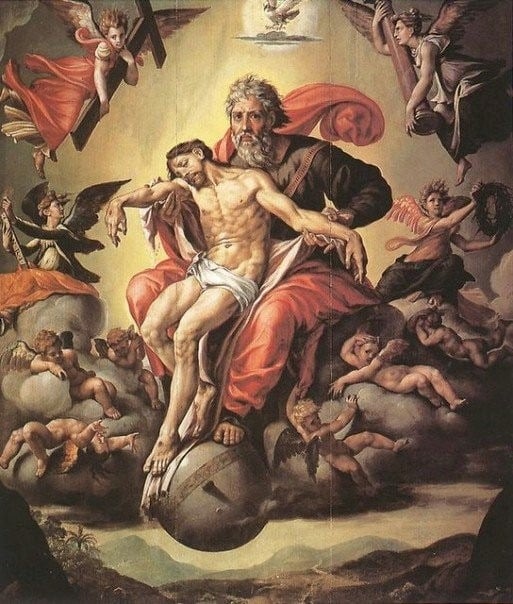
Jesus is the Second Person of the Holy Trinity. In believing in Jesus and meditating upon His words we cannot but come to know His great love for each of us and for all mankind. As St. Paul proclaims, “while we were yet sinners Christ died for us” (Rom 5:8).
We came to believe in His great love for each of us because we are His "beloved ones."
And it is through His love that we have come “to know” Jesus personally.
“God is love” says St. John, therefore, to know Jesus must have something to do with love.
St. Paul states succinctly that "if one loves God, one is known by Him" (1 Cor 8:2).
It is in this sense that Jesus declared that he would someday have to reject many of his followers because He never “knew” them.
This is to say that in following Him, they never came to truly love Jesus for whom He truly was.
How could this be?
To truly “know” someone is to have been open to a loving relationship with them.
And, we can come to love another, despite their faults and failings, because we choose to love.
Is this not how God has proved His love for us?
I think of a mother or father who never gives up on their wayward child.
God never gives up on us, His children. I wrote at greater length on this (here).
What is the nature of the ‘knowledge’ that love gives us and how does it differ from mere intellectual knowledge about another person?
We know from our Catholic philosophical tradition that our soul has the faculties of intellect and will. These two faculties differ in the way they know and relate to things, particularly God's grace.
And herein lies the difference between merely knowing something about someone and truly knowing them.
With our mind we can know all about God, but it is only through our will that we have communion with Him.
The demons know and believe in Jesus's divinity but shudder (Jm 2:19).
They can never really “know” Him because it is impossible for them to love. Simply, they cannot freely choose to love anything by their nature.
It is the nature of the will to conform itself to the object of its love.
The Saints were fond to say that If we love the world we will become worldly, whereas if we love the things of heaven we become heavenly.
The power of the will to unite with things is the basis for what mystical theologians call the "transforming union of love."
The will has the power of "connaturality." "Con" comes from the Latin "com" meaning to unite or link with, and "naturality" of course refers to nature.
Through love we come to share the "nature" of God who is love.
The intellect, on the other hand, grasps ideas, concepts.
And God in his divine nature is beyond the grasp of our intellects, but not our wills.
We cannot truly unite with him with our intellects but we can with our will, which unites through love.
Loving God does require all the faculties of our soul for we cannot love what we do not know.
In knowing and loving God we come to share His divine nature, we become like Him.
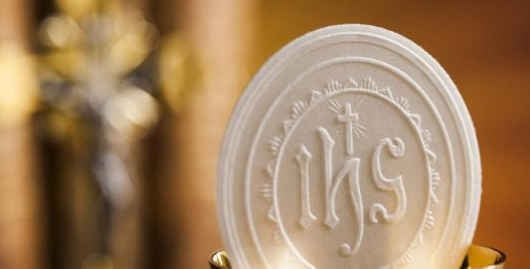
Let us take Holy Communion as an example of how we come to grasp the object of our love just as love grasps us.
Every Holy Communions is intended by God to give us ‘connatural’ knowledge of Him, that is affective knowledge of our will.
St. Augustine said profoundly that “we become what we eat.”
When we have Communion with Christ in the Holy Eucharist, His love makes us like Him.
In sharing his love, He comes to live and love in and through us.
St. Paul could confidently say, "it's not I that live but Christ who lives in me" (Gal 2:20).
I like to paraphrase this verse as "it's not I that love but Christ who loves in me."
As believers in Christ, we are meant to be Christ's love in the world.
As we share in His indwelling Holy Spirit, that we have all received as believers, Christ's Spirit loves in and through us.
But we must first believe!
Jesus stands at the door and knocks.
It is our faith in Him that enables us to hear His knock.
And it is desire for His love that opens the door to let Him come into our hearts and love us.
It is then that He “dines” with us. He is the “food that endures for eternal life.”
We “work” for this food, as already noted, particularly by believing in His True Presence in the Holy Eucharist.
But we must always remember that this power to believe must be given “from above” (Jn 6:65).
It is given to those who implore Him for Faith, who beg Him to reveal Himself to them,
“help me in my unbelief” (Mk 9:24) said the helpless Father of a possessed child.
Lord, help us in our unbelief for we are helpless without you.
On that note, I often wonder with deep regret that many of our Catholics might be receiving Holy Communion without ever coming to “know” Jesus.
We priests jokingly refer to the ‘Easter Lilies’ and ‘Christmas Pointsettas,’
or the Catholic faithful who only show up for Mass on Easter and Christmas.
I also think of those Catholics who, without being in a state of grace,
come and receive the Sacred Host without having received the grace of absolution.
They dutifully line up to receive the Host, His sacred Body, and Blood,
His very Soul… but without any love, without the will to obey... they do not receive His loving grace.
Sadly, it may be that Jesus will one day say to them “truly I never knew you.”
Back to BlogsThe Bread of Life
God's Love
The Bread of Life
May 20, 2025
by Fr Michael Hinken, SOLT, JCL
Stay inspired.
Subscribe to receive reflections and updates straight to your inbox.