( Here ) RC took “umbrage” with my contention that God loves her just the way she truly is.
There ( Here ) I addressed in more detail what the nature of love is and how we were created to be one with God and one with one another in the Unity of the Trinity.
In this third part of my response to RC, I wish to reflect on the question of how we are to understand the presence of Christ within our souls.
The Church Fathers were fond of saying of Christ that “God became man so that man could become like God." How do we human persons “partake” of the Divine nature so as to become like God? As we have shared in those other two blogs, we become like God through our union of love with Jesus Christ.
Christ’s love for you and me is the foundation of a personal relationship we come to share over time with Him that grows by faithful correspondence to the grace and promise of His love.
What is the nature of this relationship? It is deeply personal, a mutual knowledge born of love.
We come “to know Him as we are known” (1 Cor 13:12).
And to be known by God is to be loved by Him and for us to ‘know’ Him is to love Him in return.
Recall what Jesus will say someday to some of his followers, hopefully never to you or I.
These have supposedly done great things “in His Name”… yet He says to them, “Depart from me for I never knew you!” (Matt 7:23).
In what sense did those supposed followers not “know” Jesus?
In Semitic thought ‘knowledge’, ‘love’ and ‘conjugality’ are somewhat related.
For example, in Genesis 4:1 we read that Adam “knew” Eve and subsequently she bore him Cain.
The Hebrews, the forefathers of our Christian Faith, understood that there is an interpersonal ‘knowledge’ born of love. And because “God is love” (1Jn 4:8), we can have a ‘knowledge’ of God born of love that is not purely intellectual. In other words, those disciples never had such 'knowledge' of Jesus for they never knew His love!
This brings us to our point: to know Jesus is to love Him and to be loved by Him.
To love Jesus is to share with Him His gift of eternal life.
Jesus' love is eternal life!
Allow me to explain further RC.
Because Christ Jesus, the 2nd Person of the Trinity became flesh, His human nature, now glorious from the Resurrection, is capable of communicating to us His divine life, that is sharing with us his divine attributes.
This truth is the basis of our Catholic Sacramental theology, i.e. the Holy Eucharist, marriage, etc..
These Sacraments bring us into communion with Him, with His divine life; a life that is transforming.
We share in Christ’s divine gifts the greatest of which is His love. His love actually make us like Him.
This all means that our ‘personal knowledge’ of Christ is a communion with Him,
which becomes our sharing in His glorified human nature and all its divine attributes.
The Saints were fond of saying that we enter Christ’s divinity
through His humanity.
This is all possible because Christ, the 2nd Person of the Holy Trinity, became incarnate and took our human nature upon Himself.
St. Thomas Aquinas wrote: “The full participation of the Divinity… is bestowed upon us by Christ’s humanity, for Augustine says in a sermon: ‘God was made man, that man might be made God.’"
As St. Thomas confirms, our “participation of the Divinity” is a sharing in the divine attributes of Christ’s Glorified human nature.
In being one with Christ in love, His glorious divine nature becomes part of our human nature… in part now, fully in heaven.
But we do share now in Christ’s divine nature, somewhat, writes St. Peter (2Pet 1:3-4), who writes that we "through the knowledge of Him... become partakers in the divine nature."
This occurs by means of our mysterious yet certain personal knowledge of Him.
The word “knowledge” that St. Paul uses here means divine “knowledge” and not human knowledge (in Greek it is: ἐπίγνωσις – epignōsis).
It is knowledge attained as the fruit of spiritual communion with God in prayer.
It is the experience of His Divine Love, the awareness of being beloved of Him.
This knowledge, this experience, is revealed through the Holy Spirit
This knowledge, furthermore, is mysterious.
First, because it is a knowledge coming from above that Christ is ‘within me.’ Second, being personal, it is both a ‘knowing’ and ‘being known’ by Christ. We “know Him as we are known.” Lastly, it is a knowing (sharing in) Christ’s own union of love with His Father. And this is another key: in loving the Son, the Father loves Christ in me. To be one with Christ in love is to partake of the communion He shares with the Father, in one Divine nature.
Now we have come full circle. Christ living in me is the “new man” that St. Paul speaks of (Eph 4:24).
This “ new man” is like a seed that is planted within our hearts in baptism, that indwells and grows in us through a life lived in the union of love with Christ. And this ‘new birth’ into Trinitarian love is what Jesus gave to the disciples: His Glory.
He prayed to the Father: “I have given them the Glory You gave Me, so that they may be one as We are one — I in them and You in Me” (Jn 17:22-23).
The Glory of the Father, the Holy Spirit, that Jesus gave His disciples made them “fully alive” and one with Him.
And we all united together in him are one mystical body in Christ.
Yes, it is then that we are “fully alive” in Christ, in this ‘union’ of love wherein Christ Jesus makes us all partakers of His divine nature and sharers in the Glory of His Father.
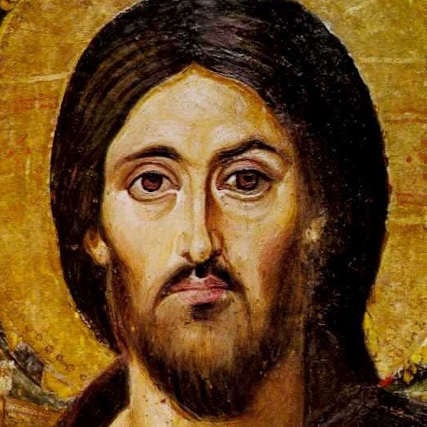
“…the light of the knowledge of the glory of God,
in the face of Christ Jesus.” (2 Cor 4:6)
The loving union between the soul and Christ gives us a certain and uniquely personal ‘knowledge’ of Christ. In this union He is the object of our love as we are ‘His beloved.’
As I emphasized ( Here ), being ‘beloved’ is to be loved uniquely and particularly “as if you were the only one.” I noted how it is the nature of our human spirit to ‘go out of itself’ and unite with others in love. In transcending itself to unite with the divine object in love, our created spirit knows itself more fully as beloved of God, "as if you were the only one."
In this, part 3, I want to conclude by showing how the revelation of Christ, in me is a mysterious reflection in our soul of His Presence, His face, as reflected in the “mirror” of our souls. This is possible through Grace because we were created in God’s image. For God said, "let us make man in our image" (Gen 1:26).
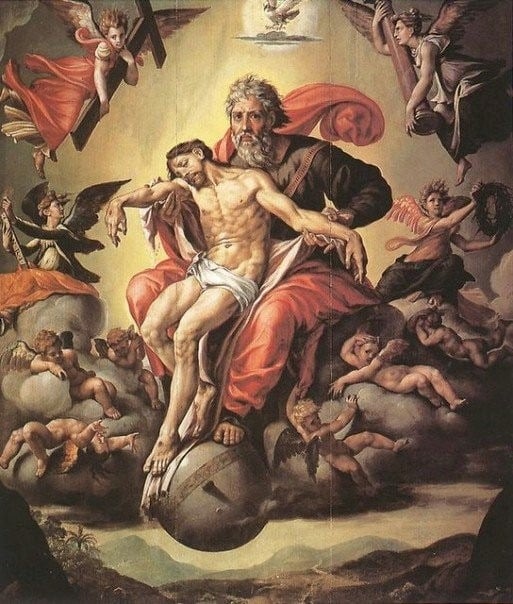
God the Father is the Archetypal Image, for he is eternally imaged by the Son and, in turn, the Son images the Father.
Man is created with this same affinity to image God.
But sin distorted God’s image in the spirit of our souls, which the Church Fathers liken to a mirror. Christ’s paschal mystery restores the mirror’s capacity to reveal him in this mirror of our souls.
In Christ, we “image His Image.”
St. Paul describes this mirroring of Christ as a transformative gazing or beholding on our part of the face of Christ within the soul.
He writes to the Corinthians: “we all, with unveiled face, beholding as in a mirror the glory of the Lord, are being transformed into the same image from glory to glory, just as from the Lord, the Spirit” (2 Cor 3:18).
And a few verses further, “For God, who commanded the light to shine out of darkness, hath shined in our hearts, to give the light of the knowledge of the glory of God, in the face of Christ Jesus.” (2 Cor 4:6).
The Greek word translated as “face” in most Bibles is prosopon, which is also the Greek word for “person.”
This is the point.
In our union of prayerful love the Holy Spirit, united to the created spirit of our soul, acts as a mystical “mirror” revealing to us the loving presence of the person, or face, of Christ.
This is not an imaginative or intellectual vision, but rather a delicate and subtle awareness of His loving presence within the soul.
The more attention, in prayer, we give to His presence, the more united we are to Him!
There is a mystery to this mystical union with Christ.
It is mysterious because it pertains to the realm of the heart, to the realm of that which is interpersonal and spiritual, not merely an idea or figment of our imagination.
Furthermore, it conforms to the truth of Divine Revelation… for the presence of Jesus indwelling the soul is a divine revealed truth of Sacred Scripture. Jesus said, "If any one love me, he will keep my word. And my Father will love him and we will come to him and will make our abode with him."
(Jn 14:23). We need only to believe.
Allow me to try to explain better what our “awareness” of His Indwelling Presence is.
We ‘see’ Him with our hearts in a way we cannot see Him with our eyes... apart from a very special grace.
This is the way that love yields endearing knowledge of another.
On a natural level, is it not true that we can understand what is beautiful and good about another by observing their appearance and actions? But even more so, by our inward sense of their goodness, their lovableness.
This love is further enriched in sharing their love. It is in this way, on the level of grace, that we know Christ and “see” His supernatural, glorious beauty... His goodness.
And it is this love that He so bountifully shares with us that deepens our desire for Him.
“…it pleased God… to reveal His Son in me…” (Gal 1:16)
St. Elizabeth of the Trinity describes well this knowledge of the loving union she shared with Christ.
Writing in her “Last Retreat” to her sister Guite, she depicts her attention to the love of God (whether Father, Son, or Holy Spirit) as a simple “gaze.”
She writes, “The soul, by the simplicity of the gaze which it fixes on its divine object, finds itself set apart from all that surrounds it, set apart also and above all from itself.
Then it is resplendent with this ‘knowledge of the glory of God,’ of which the Apostle speaks because it permits the divine Being to be reflected in it, and all His attributes are communicated to it.”
This “gaze” of mutual love is not necessarily an ecstasy, but rather a heightened awareness of God’s loving presence within the pure of heart.
They “see” God within themselves (Matt 5:8).
God is the consuming object of their will in his union of love with them.
The Saint describes the fruit of this union as a sharing in Christ’s personal “attributes.”
She “sees” Christ’s beauty, His goodness, His truth reflected within herself!
Christ’s virtues have become her virtues.
All the divine attributes of Christ are communicated from Him to His beloved through this loving gaze.
She senses all of them to be her own.
This points to one meaning of that enigmatic Johannine phrase, “we shall be like Him because we shall see Him as He is" (1 Jn 3:2).
Seeing Christ makes us like Him. Again this refers to the transforming vision in the mirror of the soul that St. Paul describes.
This point is made even clearer in what St Clare of Assisi writes to her Sister Agnes, “He (Christ) is the brightness of eternal glory, the splendor of eternal light, the mirror without spot. Look into that mirror daily, O queen and spouse of Jesus Christ, and ever study therein your countenance…”
Christ does reveal Himself to the soul as its ‘alter self.’
This is surely a great mystery.
I believe that this is the truth of the revelation of the “new man” of St Paul, which we all are “in Christ.”
He is our true identity that is unique to each one of us.
He is our true self-image as baptized sons and daughters of the Father.
This revelation is the source of true self-love and having an authentic self-image of ourselves.
St. Bonaventure also expresses this point in his treatise "The Soul’s Journey into God."
Entering into ourselves by grace the Saint writes “you will be able to see God through yourself as through an image, which is to see (Him) through a mirror in mystery.”
It is as in a mirror that “…the light of truth, as from a candelabrum, glows upon the face of our spirit, in which the image of the most blessed Trinity shines in splendor."
He concludes, “Enter into yourself, then, and see that your soul loves itself most fervently.”
This is not a self oriented love, but rather a sharing in the very interior life of the Holy Trinity.
We are loved and love ourselves as they love one another and us!
In conclusion, returning again to St. Paul, this revelation of Christ in our souls is our beholding of “the glory of the Lord – as in a mirror” (2 Cor 3:18).
It is a 'beholding' that enables us to partake in the attributes Christ’s glorified human nature (2 Peter 1:4); His very divine holiness.
'He beholds us' as objects of His love as we behold Him.
His look confers upon us the power to love in ourselves and in others ‘what He loves in us.’
It is then that we come to truly “know” and love God and know and love ourselves and others as we are “known” and loved by God (1 Cor 13:12).
I also believe that this is what St. Paul meant in stating that we share in the “knowledge of the glory of God.” It is the fulfillment of Jesus’ prayer in the garden of Gethsemane (Jn 17:22, 26) when He prayed, “The glory that you have given me I have given them… that the love wherewith thou hast loved me may be in them, and I in them.”
RC, we have to believe that the Father has heard this prayer and is answering it for you and me… now and forever.